

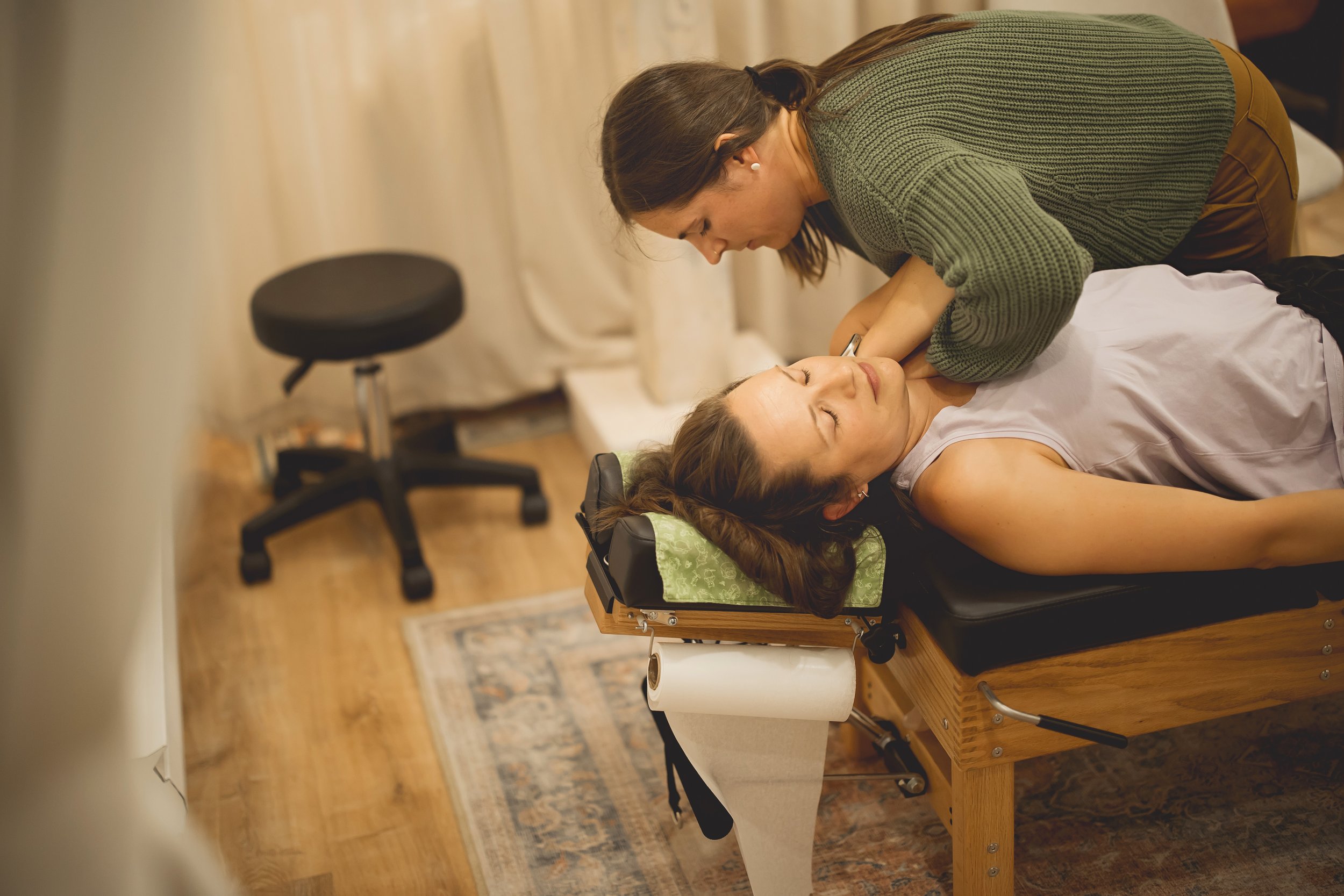
Neurologically Focused Chiropractic Care
Care is built around your nervous system, not your symptoms
At Running Wild Chiropractic, care is built around your nervous system, not your symptoms. Your nervous system controls every single function in your body, and how well it's actually working.

What to Expect
Your first visit starts with a deep dive into your current and past health history. I want to understand what's brought you in, what you've tried before, and what you're hoping for. From there we'll do a thorough assessment including your INSiGHT nervous system scan, so we can build a clear picture of what's happening in your body before we ever make an adjustment.
Your adjustments are specific and focused. Visits are purposeful and efficient, because the goal is precision and quality. We work with your nervous system's capacity to integrate change, which means doing the right thing at the right time matters far more than doing everything all at once.
Care plans are built around your goals and your life. Some families come in for a specific season, pregnancy, postpartum, or a health challenge they want support through. Others make this part of how they maintain their family's health long term. Both are completely valid, and we'll talk through what makes sense for you.
The INSiGHT Nervous System Scan
The INSiGHT scanning technology adds a deeper insight into how your body is functioning and coping with stress. Before your first adjustment, you'll receive a nervous system scan. This non-invasive technology gives us an objective look at what's actually happening in your nervous system, information that's invisible to the eye but profoundly important for your care.
These scans measure three key things.

First, a Heart Rate Variability (HRV) assessment, which tells us how well your body is adapting to stress and gives us an overall read on your nervous system's battery level. How much reserve does your body actually have?
Second, is a thermal scan that assesses the broader function of your autonomic nervous system, the part responsible for your heart rate, digestion, immune response, and your body's ability to regulate and adapt.
Third, measures muscle tension patterns along the spine, which reveal where your nervous system is holding onto stress and how that's affecting your body's overall function.
The result is a detailed picture of your nervous system health, one that we use to guide every adjustment we make. Knowing exactly what your nervous system needs that day means the care you receive is more targeted and more effective.
We re-scan regularly throughout your care so we can both see the progress happening beneath the surface, even before you may feel it yourself. It's one of the most exciting parts of care, because watching your nervous system data shift confirms that your body is doing exactly what it's supposed to.

Your body already knows how to heal. Sometimes it just needs the right support.
The families who find their way here are usually the ones who have been paying attention. They know something is off. Or they know their child deserves more than "she'll grow out of it." Or they've tried other things and felt like they were only ever getting part of the picture.
This is where the whole picture comes in. A nervous system that's supported, regulated, and given the space to do its job. That's where real, lasting change happens, and that's what we're here to help you build.

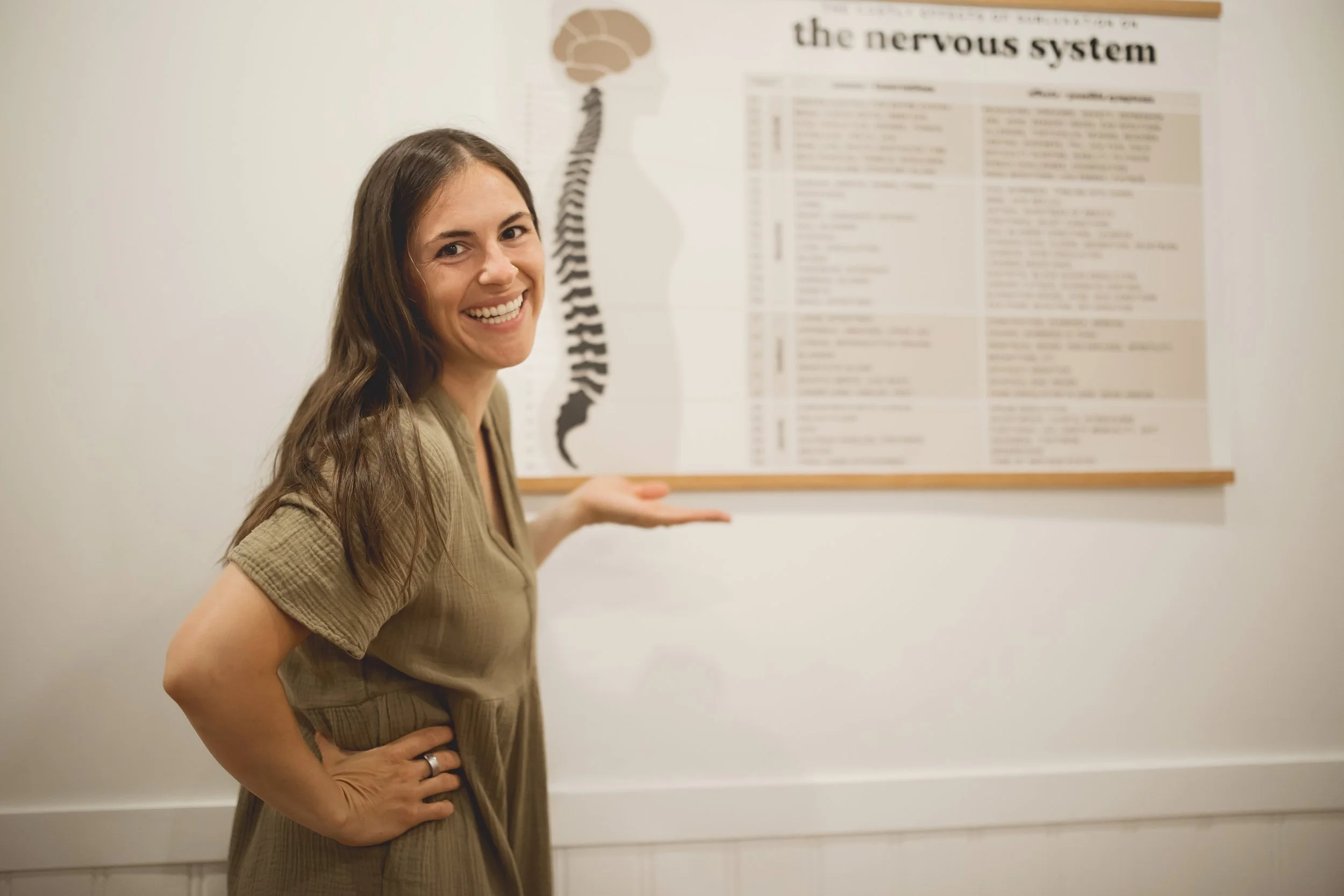
Who Is This For?
This practice is built for families who want to take a proactive, natural approach to their health. People who aren't just looking to get out of pain, but who want their bodies and their children's bodies to function at their highest potential.
If you're pregnant, postpartum, or bringing in your baby or child, you're in exactly the right place. Those populations are at the heart of what we do here. Adults are welcome too, particularly those who are looking for a nervous system focused approach and are ready to invest in their long-term health rather than chasing symptoms.
Frequently Asked Questions
Your questions about the Neurologically Focused Chiropractic Care, answered.
-
Most traditional chiropractic care is focused on pain relief. You come in with a sore back, you get adjusted, you feel better, you leave. That model works for a lot of people in the short term, but it doesn't ask the deeper question of why your body keeps ending up in that state.
Neurologically-focused chiropractic starts from a completely different place. Instead of chasing symptoms, we look at your nervous system as the control centre for everything happening in your body. Using INSiGHT scanning technology, we can actually measure how your nervous system is functioning and identify where stress is interfering with your body's ability to regulate and heal. The adjustments we make are specific to what your nervous system needs, not a general protocol applied the same way to every person who walks through the door.
The short version: traditional chiropractic works on your spine. What we do here works on your nervous system, through your spine.
-
This varies from person to person and we'll always talk through what makes sense for your specific situation. That said, nervous system change takes consistency. Your brain and body need repeated input over time to build new patterns, which is the whole premise of neuroplasticity.
For most people starting care, that means more frequent visits in the beginning while we're actively working to shift longstanding patterns, then gradually spacing out as your nervous system becomes more resilient and self-regulating. Think of it less like going to the doctor when something is wrong and more like going to the gym. The results come from the accumulation, not the one-off visits.
-
This is one of the most important questions you can ask, and the fact that you're asking it means you already understand something most people miss.
Pain is one of the last signals your body sends, not the first. By the time something hurts, your nervous system has usually been under stress for a while and has already used up its compensating strategies. Many of the families I work with aren't in acute pain at all. They're noticing things like poor sleep, low energy, difficulty recovering, a general sense that their body isn't quite keeping up. Or they're parents who want to support their child's development proactively, before challenges show up.
The INSiGHT scan is actually really useful here because it can show us what's happening in your nervous system regardless of whether you're in pain. It gives us an objective baseline and helps us have a real conversation about whether care makes sense for you right now.